AMR vs AGV: Which Is Right for Your Warehouse?
By Rovidence · Published · 2 min read
The AMR vs AGV question is usually framed the wrong way. Buyers ask "which technology is better" when they should ask "which technology matches my routes, traffic, and change profile."
The core difference
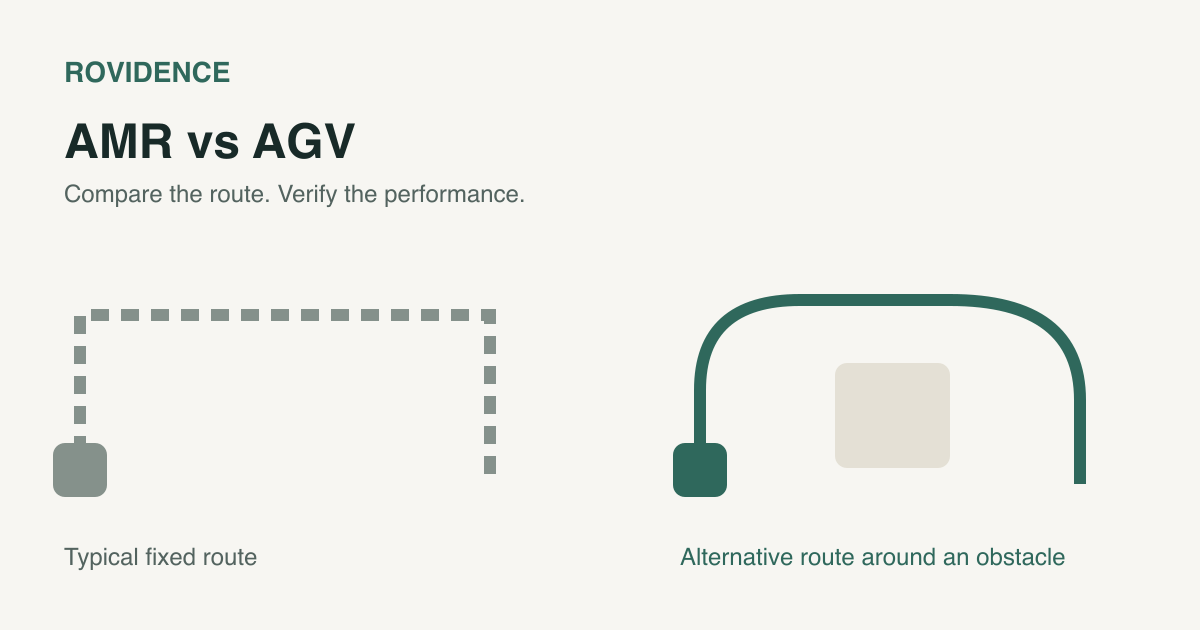
An AGV typically follows predetermined routes using an external guidance system or configured navigation. An AMR typically uses onboard sensors and a digital map to plan its route. The boundary is not absolute: some systems support both fixed routes and autonomous detours. Check the selected robot’s navigation and safety behaviour rather than relying on its label.
What that means in practice
| Factor | AGV | AMR |
|---|---|---|
| Navigation setup | Fixed routes; guidance may use tape, markers, reflectors or natural features | Typically mapped using onboard sensors; site preparation is still needed |
| Route changes | Reconfigure guidance or route controls, depending on the system | Usually update the map or routing configuration |
| Obstacle handling | Often stops and waits; capabilities vary | May reroute if a safe alternative path is available |
| Cost | Compare complete installed and operating costs | Compare complete installed and operating costs |
| Best fit | Stable, repetitive material flows | Changing routes and mixed traffic, subject to pilot results |
The decision test
If your material flows are stable and repetitive, include guided systems in the shortlist and compare total installed and operating costs. If your layout, SKU velocity or peak patterns change seasonally, evaluate how each system handles remapping and traffic changes. Neither label guarantees lower cost or better performance; test the proposed configuration in your operation.
The question most buyers forget
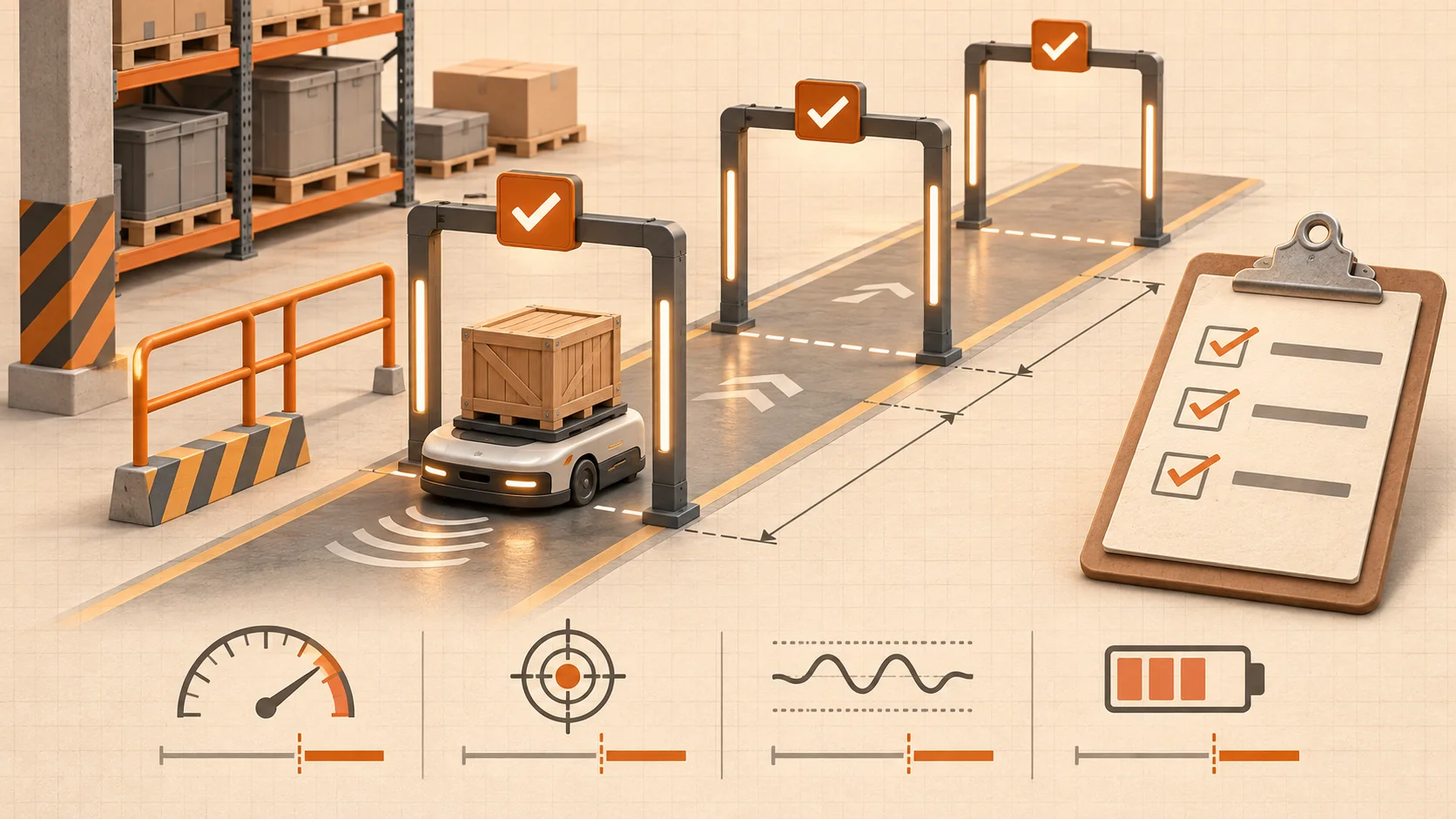
neither technology's spec sheet tells you how it performs in your building. Navigation type doesn't predict availability, intervention rate, or congestion behaviour under your traffic. That's a pilot question, not a brochure question.
Before you choose, force both vendors to state expected availability (with its definition), intervention rate per 1,000 tasks, and performance at your ambient temperature — in writing, with methodology.
Rovidence turns vendor claims into verified, comparable deployment evidence — so you compare AMRs and AGVs on demonstrated performance, not demos.
Sources and further reading
References and further context for this guide. Where a source describes a vendor’s product, confirm its applicability to your site and proposed configuration.