Robot SLAs: Response, Restoration, and Availability Commitments That Hold
By Rovidence · Published · 2 min read
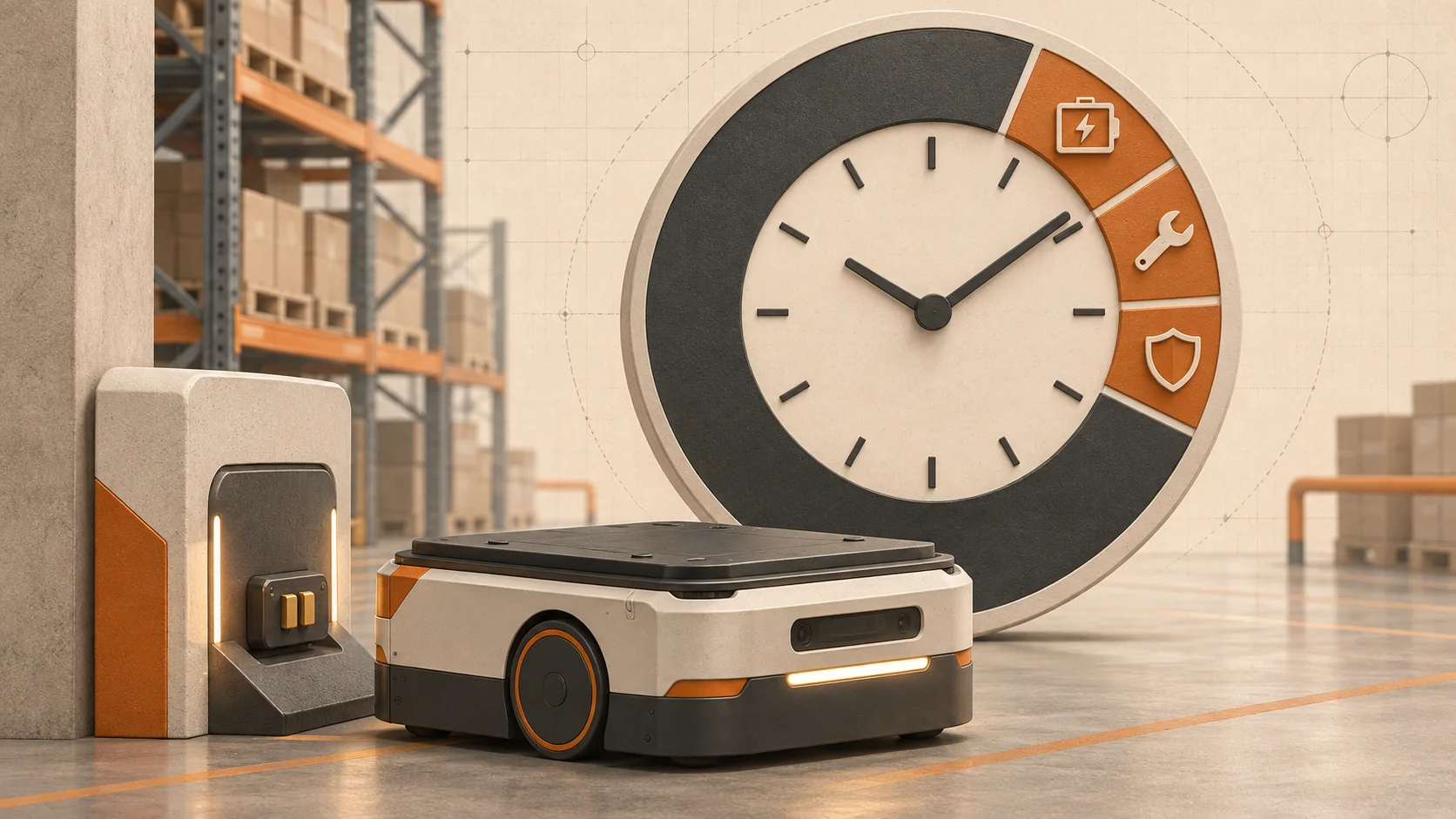
A robotics service-level agreement is a reliability contract wearing a support contract's clothes. Most buyers negotiate the response-time promise and miss the parts that determine whether the robots actually run.
Start with the availability formula
Availability = MTBF ÷ (MTBF + MTTR). The lesson: a supplier's average MTBF and MTTR figures should never be the sole basis for an availability commitment — because a great MTBF with a 48-hour MTTR (parts stuck in shipping) delivers worse availability than a modest MTBF with a 2-hour MTTR. In a 100-robot fleet, that gap is hundreds of downtime hours per year.
What a robust robot SLA contains
- Response and restoration commitments — separate numbers. Response is acknowledgement; restoration is back in production. Negotiate restoration.
- An availability formula with every term defined — and the exclusions listed.
- Planned maintenance windows agreed in advance, counted or not counted against availability — explicitly.
- The exclusion list, scrutinised. Typical exclusions: faults caused by buyer operations (operator error, improper loading, out-of-spec environmental conditions), third-party failures (facility power, network, upstream conveyor jams), and force majeure. Some are reasonable; "environmental conditions outside specification" is not reasonable if your facility temperature was disclosed and the vendor signed anyway.
- Spare-parts logistics — stock location, lead times, and who pays. MTTR is mostly parts availability.
- Remedies — service credits, and the right to terminate for sustained failure.
The questions to ask before signing
- What is the demonstrated (not calculated) MTBF of this configuration in the field?
- What does MTTR include — diagnosis, parts, repair, verification?
- Which exclusions could apply in our facility as we've disclosed it?
- What's the escalation path and the named account engineer?
Best practice
make the SLA's availability formula the same formula you use in the pilot — so the number the vendor commits to is the number you measured. Rovidence records the formulas, the demonstrated figures, and the exclusions in every deployment record, so SLA negotiations start from evidence.